
Skaffold is an open source project from Google handling the workflow for building, pushing and deploying your application to Kubernetes. It's client-side only, with no on-cluster component and has a highly optimized tight inner loop, giving you instant feedback while developing.
Read MoreAt ventx, we like to keep ourselves busy with bite-sized exercises in between projects - this one is about building a serverless Slack app with: Slack Bolt for Python, API Gateway, DynamoDB, Lambda and Terraform
Read MoreS3 Buckets emit Events which allows you to build serverless and event driven infrastructure. Events in AWS allow us to connect various Services without gluing them together with Code. S3 generated events can be consumed by SQS, SNS und Lambda which provides us great flexibility and a near endless amount of possible infrastructure variations.
Read MoreIn a previous insightful post by a collegue of mine, titled Connect your Gitlab CI/CD pipeline to AWS via OIDC, the author discussed the basics of connecting GitLab Pipelines with AWS using OpenID Connect. Building upon her valuable insights, this post will
Read MoreWhen building CI/CD Pipelines to automate the process of deploying resources in AWS via Code (IaC - Infrastructure as Code) you need to give your pipeline runner permission to deploy those resources.
Read More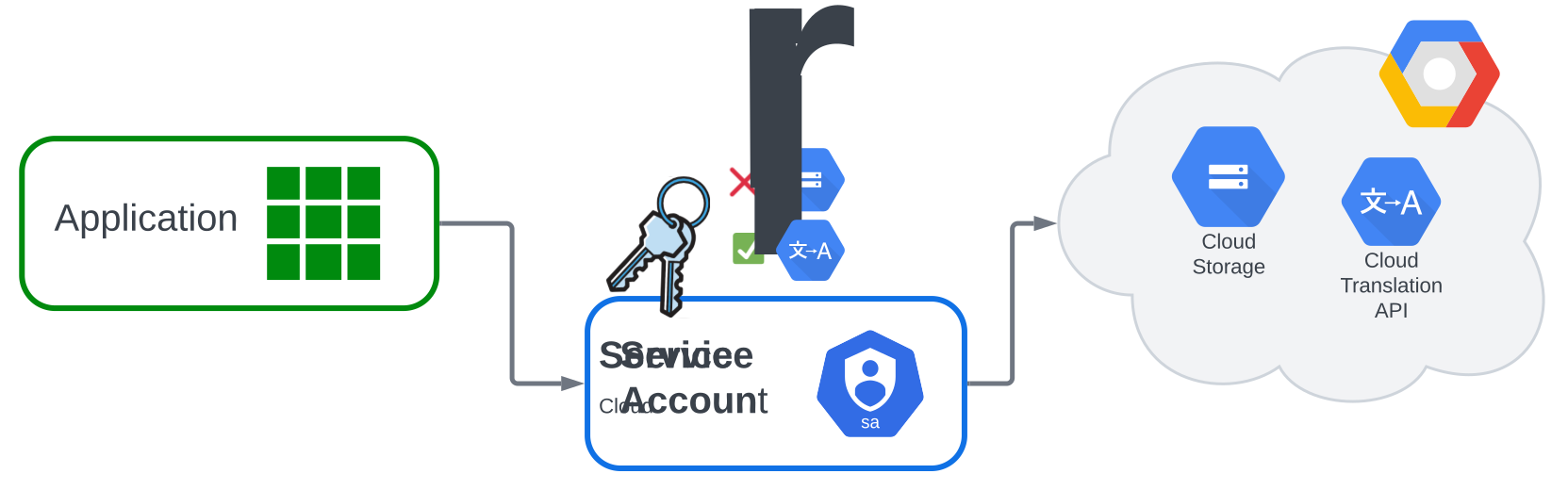
To connect an application with Google Cloud resources, we need a Service Account. Service accounts allow you to assign an identity to an application and give that identity specific permissions, such as accessing for example to Google Cloud Translation API but not to Cloud Storage bucket.
Read MoreA lot of companies are running their entire IT infrastructure still in physical datacenters and while in some scenarios there are a valid reasons to stay on earth, missing knowledge and uncertainties are often a blocker for an informed decision.
Read More